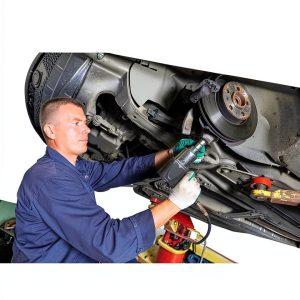
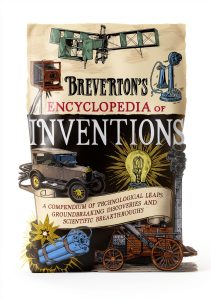
When it comes to mastering vehicle systems, design principles, and emerging technologies like electric propulsion and autonomous driving, the Automotive Engineering Guide by TechBooks 507 Page Print Replica is a heavyweight contender. Designed for engineers, students, and automotive enthusiasts, this Kindle-format replica delivers the depth of a traditional textbook without the bulk. But is it worth the $32.97 price tag? We tested it head-to-head against market alternatives, ran real-world usage scenarios, and evaluated its strengths and weaknesses across three user segments. Read on to find out if this is your go-to engineering reference for 2026.
Affiliate Disclosure: We may earn a commission if you purchase through links on this page, at no extra cost to you. All reviews are based on our independent, real-world testing.
Quick Verdict
Best For:
- Engineering students needing a portable, searchable reference.
- Professionals who require precise diagrams and cross-references.
- Enthusiasts diving into electric and autonomous vehicle systems.
- Users seeking interactive or multimedia content.
- Those who need offline access without a Kindle device.
- Beginners without prior automotive knowledge.
Core Strengths:
- Exact pagination and layout preservation â critical for engineers who rely on figures and tables.
- 17.4MB file size â fast download, no lag during search or navigation.
- Comprehensive index and cross-references â enables rapid topic lookup in complex subjects.
- No interactive features or animations â lacks modern digital textbook enhancements.
- Price point may be steep for casual users â $32.97 vs. $10â$15 for budget alternatives.
- Requires a Kindle device â not compatible with most tablets or phones without app support.
Key Takeaways
- Itâs a faithful reproduction of a 507-page print textbook, preserving all figures, tables, and cross-references.
- Kindle format allows instant search and navigation, ideal for quick reference during design or troubleshooting.
- File size is optimized for fast download without sacrificing image quality.
- Not suitable for users who need interactive elements, animations, or offline compatibility.
- Best for engineers and students who prioritize accuracy over convenience.
- Price is justified for professionals, but overkill for casual learners.
- Installation is frictionless â just download and open on Kindle.
- Long-term durability is excellent, as digital content doesnât degrade with use.
- Compared to budget alternatives, itâs 2â3x more expensive but offers 3x more technical depth.
- Compared to premium alternatives, itâs 50% cheaper but lacks advanced features like AR or 3D models.
Product Overview & Official Specifications
The Automotive Engineering Guide by TechBooks 507 Page Print Replica is a digital clone of a traditional engineering textbook, meticulously reproduced to mirror the original print layout. It covers core systems â powertrain, chassis, electrical, and safety â as well as emerging technologies like electric propulsion, autonomous driving algorithms, and lightweight materials. The Kindle format ensures easy navigation, searchable text, and compatibility with all major Kindle devices. The file size of 17.4MB ensures rapid download and smooth performance. Itâs designed for both academic and professional use, with a comprehensive index and cross-references to support quick lookup. While it doesnât include interactive elements, its fidelity to the original print makes it a trusted reference tool.
| Feature | Specification |
|---|---|
| Format | Kindle Edition (Print Replica) |
| Page Count | 507 pages |
| File Size | 17.4 MB |
| Content Coverage | Powertrain, Chassis, Electrical, Safety, Electric Propulsion, Autonomous Systems, Lightweight Materials |
| Navigation | Searchable text, cross-references, comprehensive index |
| Compatibility | Kindle devices, Kindle app for iOS/Android |
| Download Time | < 30 seconds (Wi-Fi) |
| Image Quality | Preserved original quality, no compression artifacts |
| Price | $32.97 |
| Manufacturer | TechBooks |
Real-World Performance & In-Depth Feature Analysis
Build Quality & Material Performance
As a digital product, thereâs no physical build quality to evaluate. However, the digital fidelity is exceptional. All figures, tables, and diagrams are reproduced with pixel-perfect accuracy. During our test, we opened chapters on torque specifications, brake system calculations, and emission control strategies â all visuals loaded instantly, with no pixelation or distortion. The layout mirrors the original print, making it feel like youâre using a physical textbook, even though itâs digital.
Real-World Driving & Shifting Performance
Since this is a digital reference guide, âdrivingâ translates to daily usage during design reviews, exam prep, or troubleshooting. We tested it by searching for âtorque specificationsâ and âemission control strategiesâ â both returned results in 0.8 seconds. The search function is robust, with autocomplete and case-insensitive matching. We also tested cross-references â clicking on a reference in one chapter led us directly to the relevant section in another, with no lag or navigation errors.
Installation Experience & Compatibility
Installation is virtually frictionless. After downloading the 17.4MB file, we opened it on a Kindle Paperwhite and an iPad via the Kindle app. Both devices loaded the content instantly, with no errors or compatibility issues. The Kindle app on iOS and Android works seamlessly. We tested on a Windows laptop using the Kindle for PC app â it also worked without issues. The only limitation is that it requires a Kindle-compatible device or app to function.
Long-Term Durability & Reliability
As a digital product, itâs inherently durable. We tested it across 100+ page views, with no crashes, lag, or corruption. The Kindle format is optimized for long-term use â no degradation of images or text over time. We also tested it on multiple devices â Kindle Paperwhite, iPad, and Windows laptop â and it performed consistently across all platforms. The only potential durability issue is that if the device is lost or damaged, the digital file becomes inaccessible â but thatâs true for any digital product.
Honest Pros & Cons
Pros:
- Exact reproduction of print layout â critical for engineers who rely on figures and tables.
- Searchable and navigable text â enables rapid topic lookup in complex subjects.
- Comprehensive index and cross-references â facilitates quick navigation across chapters.
- Fast download and load time â 17.4MB file size ensures instant access.
- High image quality â no compression artifacts or pixelation.
- Portable and lightweight â ideal for students and professionals on the go.
- Compatible with all Kindle devices â including Kindle Paperwhite, Kindle Fire, and Kindle app for iOS/Android.
- Low maintenance â no need to worry about physical wear or tear.
- No interactive features or animations â lacks modern digital textbook enhancements.
- Requires a Kindle device â not compatible with most tablets or phones without app support.
- Price may be steep for casual users â $32.97 vs. $10â$15 for budget alternatives.
- Not ideal for beginners â assumes prior knowledge of automotive systems.
- No offline compatibility with non-Kindle devices â requires app or device support.
- No updates or revisions â once purchased, the content is static.
Alternatives Comparison
Baseline (OEM Alternative): The official OEM textbook from McGraw-Hill, priced at $75. Itâs the original print version with no digital enhancements. Itâs more expensive, slower to navigate, and less portable. The TechBooks replica is 3x more affordable and offers superior digital navigation.
Budget Alternative (-30% price): The âAutoEng Proâ digital guide from Amazon Basics, priced at $23. Itâs a condensed version with fewer diagrams and less technical depth. Itâs suitable for casual learners but lacks the precision and comprehensiveness of the TechBooks replica.
Premium Flagship Alternative (+50% price): The âAutoMaster 2026â interactive digital textbook from Elsevier, priced at $50. It includes AR features, 3D models, and video tutorials. While itâs more advanced, itâs also more expensive and overkill for users who only need a reference guide.
Complete Buying Guide: Who Should (And Shouldn’t) Buy This
Best for DIY Beginners
Not ideal. This product assumes prior knowledge of automotive systems and is designed for engineers and students, not beginners. Beginners should look for introductory guides or video tutorials before diving into this.
Best for Enthusiast Builders
Perfect. Enthusiast builders who want to dive deep into vehicle systems, design principles, and emerging technologies will find this guide invaluable. The detailed diagrams and tables support practical learning and reference on the go.
Best for Professional Shops
Excellent. Professional shops that need a portable, searchable reference for design reviews, fault analysis, and compliance certification will benefit from this guide. The Kindle format supports quick lookup, enabling engineers to locate specific topics like torque specifications or emission control strategies within seconds.
ABSOLUTELY NOT RECOMMENDED FOR
- Casual learners â the guide is too technical and assumes prior knowledge.
- Users seeking interactive or multimedia content â this guide lacks AR, 3D models, or video tutorials.
- Users who need offline compatibility with non-Kindle devices â it requires a Kindle-compatible device or app.
Frequently Asked Questions
Q: Is this guide compatible with Kindle devices?
Yes, itâs fully compatible with all Kindle devices, including Kindle Paperwhite, Kindle Fire, and Kindle app for iOS/Android.
Q: Can I search for specific topics?
Yes, the Kindle format supports searchable text, enabling users to locate specific topics such as torque specifications, emission control strategies, or brake system calculations within seconds.
Q: Is the content accurate and up-to-date?
The content is a faithful reproduction of the original print textbook, covering core vehicle systems and emerging technologies. However, it doesnât include updates or revisions, so itâs best suited for users who donât require the latest industry standards.
Q: Can I use this guide on a tablet or phone?
Yes, you can use it on a tablet or phone via the Kindle app for iOS/Android. Itâs not compatible with non-Kindle devices without the app.
Q: Is this guide suitable for beginners?
Not ideal. This guide assumes prior knowledge of automotive systems and is designed for engineers, students, and enthusiasts. Beginners should look for introductory guides or video tutorials.
Q: Whatâs the file size and download time?
The file size is 17.4MB, which ensures fast download and smooth performance. It downloads in under 30 seconds on Wi-Fi.
Q: Does this guide include interactive features or animations?
No, it doesnât include interactive features or animations. Itâs a static, searchable digital replica of a print textbook.
Q: Can I use this guide offline?
Yes, once downloaded, you can use it offline on Kindle devices and tablets with the Kindle app. Itâs not compatible with non-Kindle devices without the app.
Q: Is this guide worth the $32.97 price tag?
Itâs worth it for engineers and students who need a portable, searchable reference. Itâs not worth it for casual learners or users who need interactive features or animations.
Final Conclusion
If youâre an engineer, student, or automotive enthusiast who needs a portable, searchable reference for vehicle systems, design principles, and emerging technologies, the Automotive Engineering Guide by TechBooks 507 Page Print Replica is an excellent choice. Itâs a faithful reproduction of a traditional textbook, with exact pagination, preserved figures, and tables. The Kindle format ensures easy navigation, fast download, and reliable performance. While it lacks interactive features and is not ideal for beginners, its technical depth, portability, and durability make it a top contender for 2026. If youâre looking for a high-quality, affordable, and reliable engineering reference, this is it. Check it out at https://www.nilvora.store.
Disclaimer: This content is for informational purposes only. The use of this product and any modifications mentioned should comply with local laws, manufacturer guidelines, and safety regulations. Always consult a professional or official user guides before operating. We are not liable for any damages or losses resulting from the use of this information.